
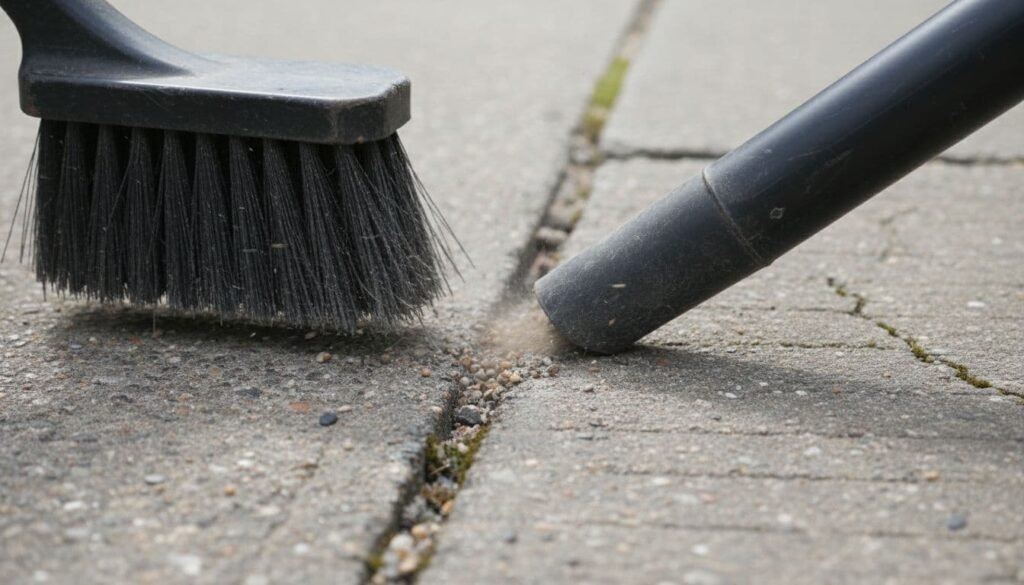
A hairline crack in your patio can feel like a small problem until the next hard rain or hot week makes it longer and darker. Concrete is strong, but it isn’t flexible. Once a crack opens, water and grit start working on it like a wedge.
This guide explains why hairline cracks show up around Huntsville, how to tell if they’re harmless, and how to handle concrete patio crack repair the right way before a small line turns into a trip hazard or a spalling mess.
Why hairline cracks show up on Huntsville patios
Most hairline cracks are caused by shrinkage as concrete dries and cures. That’s normal. What matters is what happens next.
In Huntsville and nearby areas like Madison and Harvest, a few local conditions can make small cracks grow:
- Clay-heavy soils: They swell when wet and shrink when dry. That movement can stress a slab, especially near edges.
- Rainfall and drainage: Water that pools along the patio edge can soften the subgrade. As it dries, the soil settles.
- Heat and humidity: Summer heat speeds surface drying. If the slab dries too fast on top, tiny surface cracks can form.
- Cold snaps: North Alabama doesn’t get constant freeze-thaw, but a few freezes with trapped water can widen a crack over time.
Hairline cracks don’t always mean bad concrete. They often mean the slab is doing what concrete does. The goal is to keep water out and movement under control.
Hairline crack or warning sign? What to look for
A “hairline” usually means you can’t fit a credit card edge into it. Many are cosmetic. Some are early signs of movement.
Here’s a practical way to judge what you’re seeing.
| What you see | What it often means | How urgent is it? |
|---|---|---|
| Thin crack, no height change | Shrinkage, surface stress | Low, seal it to block water |
| Crack that keeps getting longer | Ongoing stress, minor settlement | Medium, repair soon and watch |
| One side higher than the other | Soil movement, voids, poor support | High, repair plus leveling may be needed |
| Crack near a downspout outlet | Water problem, erosion under slab | High, fix drainage first |
| Multiple cracks in a pattern | Subgrade movement, thin slab, no joints | Medium to high, may need pro help |
A simple test helps. Lay a straight board across the crack. If it rocks or you can see daylight under it, the slab has a vertical offset. Sealants won’t fix that.
For general background on why fine cracks should still be sealed, see Repairing Hairline Cracks in Concrete.
Quick decision tree (what repair fits the crack)
Use this fast decision check before you buy materials.
- Crack is under 1/16-inch wide, and flat (no offset): Use a concrete crack sealant or a penetrating sealer.
- Crack is 1/16-inch to 1/4-inch wide, and flat: Route and seal, or fill with a flexible, self-leveling sealant.
- Crack is over 1/4-inch wide: Use backer rod plus a flexible sealant, or a polymer-modified repair mortar if the edges are breaking.
- Crack has a height change, or the patio is sinking: Call a pro. You may need slab lifting, crack stitching, or drainage correction.
- Cracks are widespread, stained, or the surface is rough: A resurfacing overlay might be the better fix (after crack prep). This is where a service like Concrete patio crack repair in Huntsville becomes a practical option.
Ideal repair conditions for Huntsville (don’t skip this)
Most patio crack products fail because the slab was damp, dirty, or repaired in bad weather.
Aim for:
- Temperature: about 50°F to 85°F during application and early cure.
- Dry weather window: at least 24 hours with no rain forecast, 48 hours is safer.
- Dry concrete: the crack should be dry inside, not just dry on top.
In Huntsville, a sunny afternoon after a rainy morning can fool you. The surface dries fast, but moisture stays down in the crack.
Pre-repair prep checklist (fast but important)
Before any concrete patio crack repair, get the basics right:
- Sweep and wash off dirt, pollen, and mildew.
- Remove any loose concrete at the crack edge.
- Let the patio dry fully (often overnight).
- Check sprinklers and downspouts, keep water off the area.
- Gather PPE: eye protection, gloves, and a dust mask or respirator.
- If grinding or routing, control silica dust (use a HEPA vacuum and follow tool safety guidance).
Step-by-step: fixing hairline cracks before they widen
Step 1: Clean the crack like you mean it
Sealant won’t bond to dust.
- Scrub the crack line with a stiff nylon brush.
- Vacuum the crack. A shop vacuum works well.
- If you rinse with water, wait until the crack is fully dry again.
If there’s oily residue from a grill mat or outdoor rug, clean it first. Oil keeps repair materials from sticking.
Step 2: Decide if you should “open” the crack
For true hairline cracks, you can often seal the surface without grinding. For cracks you can feel with a fingernail, opening the crack slightly can improve the bond.
Two options:
- No routing (fast method): Use a low-viscosity concrete crack sealant that can wick into tight cracks, then apply a penetrating sealer over the area.
- Route and seal (stronger bond): Use a V-groove crack chaser tool to open the crack to a small, consistent channel.
If you route, go shallow. You’re creating a clean pocket for sealant, not cutting the slab in half. Use dust control and wear proper PPE.
Step 3: Pick the right product type (based on crack width and movement)
Concrete moves a little with heat and moisture. Rigid patch materials can pop out if the crack keeps moving.
- Hairline to about 1/16-inch: A thin concrete crack sealant or a penetrating sealer is usually enough.
- 1/16-inch to 1/4-inch: A flexible, self-leveling polyurethane or similar exterior-grade joint sealant works well on flat patios.
- Wider than 1/4-inch: Install backer rod first, then apply sealant over it. This controls depth and helps the sealant stretch instead of tearing.
- Chipped edges or shallow spalls along the crack: Use a polymer-modified repair mortar (often sold as a concrete repair mix). These bond better than plain cement paste.
Avoid using a rigid cement-only mix in a crack that still moves. It may look good for a month, then break out after the next wet-dry cycle.
Step 4: Apply, tool, and protect
Follow the product directions for depth and cure time. Most failures come from rushing this step.
- Fill from one end to the other in a steady bead.
- Tool the surface smooth so water sheds, not pools.
- Keep foot traffic off until the product sets.
- Keep rain off during early cure; even light mist can ruin adhesion.
If you want a simple DIY overview to compare methods, this guide to repairing cracks in a concrete patio is a helpful reference.
When sealing isn’t enough (injection, overlay, or replacement)
Some problems are bigger than a surface repair. It’s better to know that early than keep patching the same crack.
Consider professional help when:
- The crack shows a vertical offset, or the patio is visibly uneven.
- Water is washing out soil under the slab (common near downspouts).
- Cracks keep reappearing in the same spot after repairs.
- The surface is scaling, flaking, or “hollow” sounding in areas.
A pro may recommend crack injection (more common for structural walls than patios), slab lifting, a bonded overlay, or partial replacement. No repair product can overcome a moving base forever.
How to keep hairline cracks from coming back
You can’t stop concrete from aging, but you can slow the damage.
- Improve drainage: Extend downspouts away from the patio. Regrade the soil so water runs off efficiently.
- Seal the slab: A penetrating water repellent helps block moisture intrusion and reduces staining.
- Keep joints working: If you have control joints, keep them clean and sealed when needed. Joints are meant to “crack” in a planned location.
Small Cracks, If Not Repaired, Lead to Big Problems Later
Hairline cracks aren’t a crisis, but they’re a signal. If you seal them early, you block water, slow wear, and keep the patio looking clean. If you ignore them, Huntsville rain and shifting soils can turn a thin line into a spreading repair.
If you’re not sure what you’re seeing, start with measurement and flatness checks. The right concrete patio crack repair depends on movement, moisture, and prep, not guesswork. When in doubt, reach out.